
A garden can be much more than a place where plants grow.
For children, it can become a small outdoor classroom filled with opportunities to explore plants, insects, weather, counting, measuring and responsibility.
Children don’t need a large backyard either. Many of these activities can be done in a childcare garden, balcony pots, planter boxes or even a few containers near a sunny window.
What You’ll Need
Depending on the activity, you might use:
- Seeds
- Small seedlings
- Soil
- Pots or garden beds
- Watering can
- Child-sized gardening tools
- Magnifying glass
- Ruler
- Paper and crayons
- Plant labels
- Small containers
Always supervise children around gardening tools and teach them not to taste unknown plants.
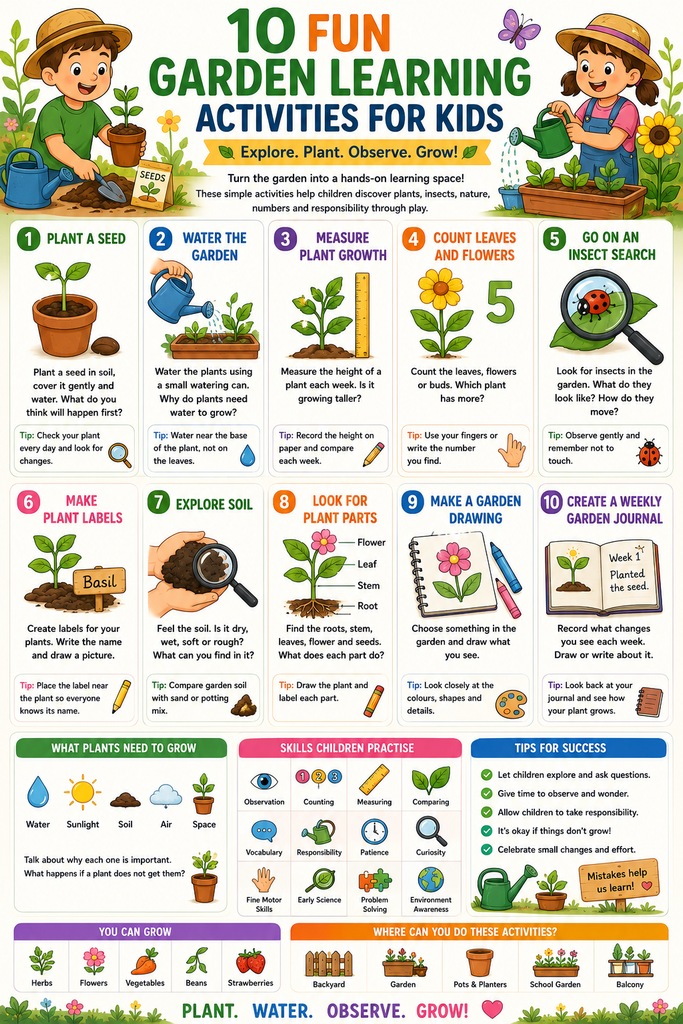
1. Plant a Seed
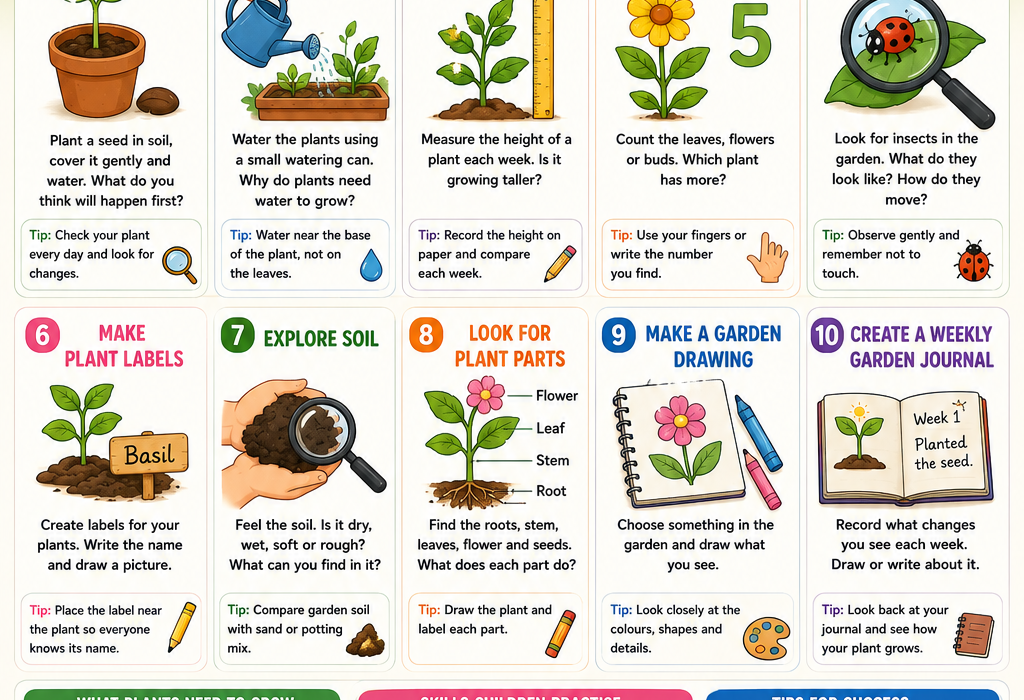
One of the simplest garden activities is planting a seed.
Let children place soil into a small pot, make a little hole and carefully add the seed.
Cover it gently and add some water.
Good beginner plants can include fast-growing herbs, beans or flowers.
Ask:
“What do you think will happen first?”
“How long do you think it will take to grow?”
Children can check the pot each day for changes.
2. Water the Garden
Give children a small watering can.
Show them how to water near the base of the plant rather than pouring too much water over the leaves.
Talk about why plants need water.
Ask:
“What might happen if a plant gets no water?”
“Can a plant have too much water?”
Watering also gives children a simple responsibility they can repeat regularly.
3. Measure Plant Growth
Choose one plant to observe over several weeks.
Use a ruler to measure its height.
For example:
Week 1 – 5 cm
Week 2 – 8 cm
Week 3 – 12 cm
Record the measurements on paper.
Children can compare:
Is the plant taller than last week?
How much has it grown?
This combines early science with maths.
4. Count Leaves and Flowers
Choose a plant and count what you can see.
Try counting:
- Leaves
- Flowers
- Buds
- Tomatoes
- Beans
- Strawberries
Ask:
“How many flowers are there?”
“Can you find five leaves?”
“Which plant has more?”
Counting real garden objects makes early maths meaningful.
5. Go on an Insect Search
Take a magnifying glass into the garden.
Look carefully for:
- Ants
- Butterflies
- Bees
- Ladybirds
- Beetles
- Caterpillars
- Spiders
Encourage children to watch without touching.
Ask:
“How does it move?”
“What is it doing?”
“Why do you think it came to this plant?”
This can introduce simple conversations about pollination, habitats and food.
6. Make Plant Labels
Let children create labels for the garden.
Write plant names such as:
Basil
Mint
Tomato
Sunflower
Children can copy or trace the words and decorate the labels with pictures.
Place each label beside the matching plant.
This brings early literacy into the garden.
7. Explore Soil
Give children a small amount of soil to investigate.
Ask them to describe it.
Is it:
Dry?
Wet?
Soft?
Dark?
Crumbly?
Look closely for small roots, stones or bits of leaves.
You can compare garden soil with sand or potting mix and talk about how they feel different.
8. Look for Plant Parts
Choose a plant and identify its different parts.
Look for:
- Roots
- Stem
- Leaves
- Flowers
- Fruit
- Seeds
You may not be able to see the roots without removing the plant, so explain that they are usually hidden under the soil.
Ask:
“Which part holds the plant upright?”
“Where do the leaves grow?”
“Where might we find seeds?”
9. Make a Garden Observation Drawing
Give children paper and crayons.
Ask them to choose something in the garden and draw what they see.
They might draw:
- A flower
- A leaf
- A butterfly
- A vegetable
- A whole garden bed
Encourage them to look closely at colours, shapes and details.
Older children can add a sentence describing their observation.
10. Create a Weekly Garden Journal
Choose one day each week to visit the same plants.
Record:
- What has grown
- New leaves
- Flowers
- Fruit
- Weather
- Insects
- Changes in colour or size
Children can use drawings instead of writing.
A simple journal might say:
Week 1: We planted the seed.
Week 2: A small green shoot appeared.
Week 3: The plant has four leaves.
This helps children understand that growth happens gradually over time.
Talk About What Plants Need
Use gardening activities to introduce the basic things plants need to grow.
Talk about:
Water
Sunlight
Soil
Air
Space
Ask:
“Why do we put this plant near the sunlight?”
“Why do we water it?”
“What do the roots do?”
Simple questions encourage children to connect their actions with what the plant needs.
Give Children Responsibility
Children often enjoy having a real job.
They might be responsible for:
- Watering one pot
- Checking whether the soil is dry
- Looking for new leaves
- Collecting fallen leaves
- Helping pick ripe vegetables
Small responsibilities can help children build confidence and care for living things.
Grow Something You Can Eat
If suitable for your setting, try growing simple edible plants.
Examples include herbs, lettuce, tomatoes or beans.
Children can observe the entire process:
Plant → Water → Grow → Harvest → Eat
This helps them understand where some foods come from.
Always make sure anything eaten is correctly identified, safe and grown appropriately.
Ask Prediction Questions
Before checking a plant, ask:
“What do you think it will look like today?”
“Do you think it will have more leaves?”
“Which plant do you think will grow fastest?”
Then compare the prediction with what actually happened.
This introduces early scientific thinking.
Skills Children Can Practise
Garden learning activities can support:
- Observation
- Early science
- Counting
- Measuring
- Comparing
- Vocabulary
- Fine motor skills
- Responsibility
- Patience
- Environmental awareness
- Problem-solving
- Curiosity
Keep the Garden Experience Hands-On
Children learn a lot by actually touching soil, carrying water, planting seeds and watching living things change.
The garden doesn’t need to look perfect.
A few pots and one growing plant can still create valuable learning opportunities.
Keep Learning With PlayPrintGrow
Gardening gives children something special that many activities cannot provide: the chance to watch change happen slowly over time.
Plant something small, care for it together and keep noticing what happens next.
Plant. Water. Observe. Grow.